
Notes on a sermon delivered at Peachtree Road Baptist Church on 03/15/2026 The full sermon can be viewed on Youtube
We open, as all great theological expeditions do, with a fat man on a greenway.
This requires a little setup. This morning, between the scripture reading and the sermon on Caleb’s durable faith, Pastor Jay delivered a list of paraprodokians — figures of speech where the second half of a sentence goes somewhere unexpected. Winston Churchill loved them. Pastor Jay loves them. One of the ones he read out this morning was: “Women will never be equal to men until they can walk down the street with a bald head and a beer belly and still think they look great.”
The morning service ended. Pastor Jay went for a walk on the greenway with his wife.
And there he was. 6’1″, 375 pounds, no shirt, coming straight at them. The man was listening to music and, apparently, feeling himself.
“He was a shape, just not a shape that’s particularly appealing.”—Pastor Jay Reed
Apparently, Jay restrained himself from sharing his feelings about the man’s appearance with this person in real time. Instead, he saved his thoughts for the pulpit, and there is something almost Pauline about the mercy of that. The man had confidence. Pastor Jay had a sermon illustration. Nobody got hurt. The congregation that was there for both services got the callback. Everyone else just got a shirtless man story, which is also fine, apparently.
He follows this with a joke: men make fun of each other but don’t mean it; women compliment each other but don’t mean it. He describes the evening ahead as “going to get weird” and promises the congregation may experience “buyer’s remorse.”
Buckle up, y’all.
We get offering announcements. Prayer requests. A woman named Joy received clear results on a lung mass and bone biopsy — genuinely wonderful news, met with genuine warmth. People here know each other. They know each other’s diagnoses, their losses, their kids’ names. Whatever else happens tonight, and things will happen, this is not a performance of community. It is the real thing.
The congregation sings “I’d Rather Have Jesus,” written by Rhea F. Miller in 1922, set to music by a nineteen-year-old George Beverly Shea after he found the poem on his mother’s piano. It is a genuinely beautiful piece of American hymnody, and the congregation sings it with heart.
I’d rather have Jesus than silver or gold. I’d rather be led by his nail-pierced hands than to be the king of a vast domain.
The singer is choosing subordination. Voluntarily, joyfully, as a free adult with full knowledge of what they’re surrendering, they are trading worldly power and status for something they’ve decided matters more. It is, theologically speaking, the highest possible form of agency: the informed, uncoerced gift of the self.
I mention this because the scripture reading that follows — Galatians 4:1-2, the heir who lives as a servant until the time appointed by the father — is Paul’s argument that this servant-stage is over. The whole point of the passage is liberation: the heir grows up, the inheritance arrives, the period of bondage ends. And in approximately forty minutes, Pastor Jay is going to use this liberation text to argue that children must be kept in permanent, unquestioned subordination to a stacked hierarchy of authorities, with no exit and no appeal.
But here is the thing that makes the hymn something other than simple irony.
Most of the adults singing it were once children in the same system Pastor Jay is about to prescribe. It is a system engineered, as we will see, to ensure there were no gaps between the authorities, no permeable edges, no viable exits. And now they are singing, with what sounds like genuine joy, about how they would rather be here than anywhere else.
The question that the hymn raises, without anyone in the room intending it, is whether that joy is evidence of freedom or evidence of how well the system worked.
Philosophers call this adaptive preference formation. It’s the “I love my cage because the bars are painted a very nice shade of blue” theory of human development. Adaptive preference describes the well-documented tendency of people who have been systematically denied options to stop wanting those options, not because they evaluated them freely and found them lacking, but because wanting things you cannot have is painful, and the mind adapts to protect itself.
Amartya Sen, who won a Nobel Prize for his work on human development, argued that adaptive preferences are one of the most insidious forms of unfreedom precisely because they are invisible from the inside. The person doesn’t feel trapped; they feel cozy.
I am not saying everyone in this room is singing under duress. I am saying that “I’d rather have Jesus than anything this world affords” carries different freight depending on whether you have ever had genuine access to what the world affords: the information, the choices, and the freedom of thought that are prerequisite to real agency.
The congregation finishes the hymn. Pastor Jay steps to the pulpit. The Galatians passage is read. And we are about to spend the next seventy-five minutes learning exactly how the next generation of singers will be prepared.
Just setting that down here.
__________________
Before we move on, there is a business item that deserves its own paragraph. This morning, midway through a sermon on durable faith, Pastor Jay stopped, stared at the railing at the front of the church, checked with someone named Donna whether his insurance was paid up, worried briefly about overshooting and hitting the piano, announced that “my ego is still writing checks my body ain’t cashing anymore” — and then jumped on the railing anyway. As an illustration of acting on faith. And he stuck the landing.
Tonight, Brother Ben has asked him not to do it again. Pastor Jay is unmoved. He has looked at the video. It wasn’t that impressive. He has been measuring the organ. The railing in the back is taller, he thinks. He has goals.
Jay treats his deacon’s reasonable safety concern with the exact kind of cheerful non-compliance that he is about to spend an hour condemning in children. I do not think he realizes this. And I love this about him.
__________________
The Prosecution Opens: Reason Did This
“I’m going to preach a message that’s going to very specifically land on the subject of raising reasonable children.”—Pastor Jay Reed
He opens with a premise that is actually reasonable: the order of relationships matters. God first, then marriage, then children. He is specifically annoyed at ministry workers who sacrifice their families on the altar of “the mission out there.”
“If you’re not going to raise your children, don’t bring them into the world.”—Pastor Jay Reed
This is a bold statement from a tradition that tends toward the belligerently pro-natalist end of the theological spectrum, but fair enough. Many children of ministry workers have processed exactly this experience in exactly the kind of therapeutic context Pastor Jay is about to spend an hour condemning. Points awarded, provisionally.
He then names the enemy: the modern philosophy that “reason begets reason.” The idea that if you engage your child with empathy and explanation, they will develop into a reasonable person. Pastor Jay treats “Reason” like a suspicious character lurking near the church nursery with a bag of participation trophies. He argues this has failed catastrophically, and as evidence, he gestures at protest culture, entitled young adults, soft judges, DEI hiring, and — we’ll get there — the 2024 Democratic vice-presidential selection process.
Before we get there, however, let’s put on the philosophy professor hat for a moment, because the argument being constructed is: modern parents use the reasoned approach → young people today are volatile and entitled and can’t handle opposing views → therefore the reasoned approach produced the volatile young people.
Post hoc ergo propter hoc, which is Latin for “this happened after that, so this caused that,” It is also the logic behind concluding that umbrellas cause rain. The relationship between parenting philosophy and generational outcomes has roughly nine thousand confounding variables that a two-verse passage from Galatians—originally written to tell people they weren’t slaves to the Jewish law anymore—was not designed to resolve.
But we are moving fast, because Pastor Jay has a lot of ground to cover and only so much Sunday evening.
Your Toddler, the Soft Judge, and the DEI Hire Walk Into a Sermon
Here is where the sermon quietly leaves its lane.
The reasoned approach, he argues, has infected not just parenting but American institutions. Courts aren’t judging guilt and innocence; they’re trying to understand the circumstances surrounding the perpetrator. He cites a man who killed a girl on a train in Charlotte and asks how many times he had been through the criminal justice system before that. He doesn’t provide the actual number—it’s just a “Vibe Number”—but he asserts it is high. He says if you removed the top 1% of repeat offenders from the streets, you’d cut crime nearly in half. I am fascinated by this 1% statistic. It has the specific, unearned confidence of a fact that was once written on a napkin at a Cracker Barrel and has since been promoted to Eternal Truth.I would very much like to know the methodology behind this figure. I suspect it was arrived at the way a lot of good statistics are: by someone saying it with confidence while other people nodded.But we are not pausing here to fact-check, because we have to talk about human resources.
Then, without signaling the lane change: DEI hiring. Businesses are not promoting based on competency because they want to be reasonable. And then, stepping carefully over a wet floor:
“Our former president — he was the resident of 1600 Pennsylvania. I don’t know if he was the president.”—Pastor Jay Reed
We are apparently agnostic on who was president. Proceeding.
Joe Biden picked Kamala Harris specifically because she was a woman of color, which Pastor Jay presents as filtering a pool of 160 million qualified people down to a small fraction based on identity rather than merit. He then pivots: Harris allegedly passed over Josh Shapiro of Pennsylvania because he was Jewish. And this, he argues, is the same spirit as the lenient judge and the enabling parent: asking “who is this person” instead of “what did this person do.”
Let’s do a Logic Audit on this specific pivot. We began with a toddler deflecting after biting someone. We are now in the 2024 Democratic vice-presidential selection process. The argument is that both involve substituting identity for straight accountability. It’s an impressive rhetorical move: if you ask your three-year-old why they’re crying, you are essentially personally responsible for the DNC platform.
Once you accept that framing, any feeling you have about progressive politics in 2024 is now attached to the idea of asking your child why they hit their brother. This is a False Analogy, but Jay is building a thesis. The enemy is “Reason.” Apparently, if you explain “why” to your child, you are the architect of national decline.
The Logic Chain (as I understand it):
- You explain to your son why he shouldn’t bite his sister.
- He grows up and becomes a “soft judge.”
- Criminals now run the subways.
- DEI hiring happens.
- Kamala Harris picks a running mate.
- The Heat Death of the Universe.
“God help us. We don’t want to be thought of as biblicists.”—Pastor Jay Reed
He says this as lament. In IFB usage, “biblicist” is a compliment — it means someone who takes the Bible as the sole sufficient authority for everything. Pastor Jay is mourning that this has become socially unfashionable.
He said this about three minutes after opining on the 2024 Democratic primary.
I mean, sure. Yes. Biblicist. Absolutely.
Misquoting the Lord
Now for the Bible. Jay has three terms for us to learn:
Under. From Galatians 4: the heir lives under tutors and governors. Under parental authority, but also under the pastor, under the school, under all the authorities the parent places around the child. “The powers that be are ordained of God,” Pastor Jay notes, “and notice that word is plural.” The first principle: build a stacked hierarchy of authority above the child, and keep the child beneath it.
Train. Proverbs 22:6. Train up a child. And here he lights up, because he played football, and football practice is his model:
“I think about two-a-days. Supreme discomfort. I thought the coaches were literally dreaming stuff up to make us miserable. And I think they were.”—Pastor Jay Reed
The hydration specialist was a line in front of a spigot and you hoped the guy in front of you didn’t spit. Monday and Tuesday were suffering. Wednesday they dialed it back. Thursday was skull sessions. Friday night, he loved it. Monday through Thursday were the price of Friday. The coaches didn’t care what the players thought because they were training, and training isn’t about what you think.
I have no problem with this as a model for preparing for athletic competition. If you want to win the state championship, you probably shouldn’t spend Tuesday afternoon debating the ethical implications of the 40-yard dash. Whether it maps cleanly onto, say, a six-year-old learning to share his Legos is a question the sermon does not ask.
The Rod of Correction. Proverbs 22:15. “Foolishness is bound in the heart of a child. But what? Oh, you don’t even want to say it out loud. I don’t want to be on record. The rod of correction.”—Pastor Jay Reed
The congregation is warm. He has them.
“The Lord says, ‘Approach it from the backside.’ Amen.”—Pastor Jay Reed
Stop here.
The Lord does not say this. Not in Proverbs 22. Not anywhere in the biblical text. “Approach it from the backside” is Pastor Jay’s line, delivered in God’s grammatical person, as a direct quote.
Jay Reed has said explicitly and repeatedly: “Your philosophies are not equal to scriptural principles.” “If you’re going to form a philosophy of child rearing, you better have Bible for it.” “Who cares what you think?”
The sermon’s entire rhetorical weight rests on the distinction between his voice and God’s voice. That distinction is the reason anyone in this room should listen to him rather than to the secular child psychologists he has been dismissing.
And now, at the precise moment he arrives at the most contested claim of the evening, the seam between “God said” and “I said” disappears entirely. He writes God a new line.
This is not calculated deception. What it is, is something more like the opposite: he has been doing this long enough, and the tradition he operates in has been doing this long enough, that the boundary between “the Bible says” and “the Bible means, which I will now state in my own words as though they are the Bible’s words” has worn completely smooth. He cannot feel the seam anymore. The ventriloquism has become invisible to the ventriloquist.
Which is, if you follow it, a problem structurally identical to the one he has been diagnosing in the parents he’s addressing. They have elevated their philosophies to the level of scripture without noticing. So has he. The difference is that his philosophy arrives in a deeper voice and uses the first person singular of the divine.
The congregation says amen. We continue.
Quick note on the Hebrew, because the Hebrew is doing something interesting: the word translated “rod” is shebet, which appears elsewhere in the Old Testament as a shepherd’s staff (Psalm 23, “thy rod and thy staff, they comfort me”), as a tribal scepter, and as a military weapon. In Psalm 23, the shepherd’s shebet is something the sheep find comforting, which is a difficult reading if you assume the shepherd is using it primarily to strike them. Scholars have argued about this for generations. As expected, Pastor Jay presents his reading as the settled one.
He quotes Proverbs 13: he who spares the rod hates his son. He who loves him chastens him betimes — “early and often. It’s like voting in Chicago.” He describes childhood reminders of the rod everywhere: paddles on the wall, fly swatters repurposed from their stated function, switches on top of the refrigerator.
“I don’t mean the ones that turn the lights on and off. I mean the ones that turn your lights on and off.”—Pastor Jay Reed
And then, approvingly. As though it were a feature:
“We haven’t reasoned with him once. We haven’t tried to understand why.”—Pastor Jay Reed
Not: “consequences before conversation.” Not: “don’t let the explanation become an escape hatch.” Understanding why your child did something is, in this framework, not a step you skip in some circumstances. It is a step that should not exist. The rod doesn’t ask why. Neither should you.
Let’s follow the implications to their conclusion. A God who designed children presumably designed them with interior lives, attachment histories, developing neurological systems, and psychological needs. The argument that this God also provided a child-rearing methodology for which all of that information is irrelevant requires us to believe that the Creator of human psychology designed a system that treats human psychology as interference.
It is also, incidentally, a terrible way to solve problems. If your car makes a strange noise and you fix it by turning up the radio, the noise stops being a symptom you can hear. But the engine is still melting.
I am trying to follow the logic here. I’m afraid I have failed to make the desired connection.
Martyrs, Milestones, and the Theological Status of the Regal Cinema
We are about an hour in, and Pastor Jay is working through a list of unreasonable parental behaviors — victim mentalities, persecution complexes, people who think the youth pastor is out to get their kid. He has been building toward a general indictment of self-pity, and he lands it with a rhetorical move that is, I have to say, genuinely effective: he defines the word “martyr.”
A martyr, he explains, is Stephen, who was stoned to death. A martyr is Antipas, who was slain in the temple. A martyr is Justin Martyr. A martyr is John Hus, who was burned at the stake for his faith in Christ.
“Well, you didn’t have a fancy car growing up, or you were in an independent fundamental church and didn’t get to go to the movies. Stop with your martyr complex.”—Pastor Jay Reed
The sequence goes: stoned to death, brutally murdered, burned alive, didn’t see Finding Nemo. He has placed the IFB movie prohibition on a list with literal execution. Not as a counterexample. As the punchline. The joke is that these things are not comparable, and you, sitting there nursing your grievance about the Regal Cinema, should be embarrassed that you weren’t set on fire.
Here’s an explainer about the movie theater thing for anyone currently reading this with a furrowed brow:
IFB families are not allowed to attend movie theaters. Any movie. Any rating. A G-rated animated film about a lost fish is off the table if you have to buy a ticket and sit in a building with a projector. This is a firm, widely-enforced boundary marker of the tradition, not a fringe position held by especially strict congregations. It is standard.
They are, however, allowed to watch that exact same movie at home. On a television. Or a laptop. Or, presumably, projected onto a bedsheet in the backyard if the spirit moves them. The content is identical. The sin, somehow, is not.
The official explanation for this is 1 Thessalonians 5:22: “Abstain from all appearance of evil.” If someone sees you walking into a theater, they cannot know whether you’re watching something wholesome or something depraved. The mere appearance of being at a theater is therefore sinful, regardless of your actual intention.
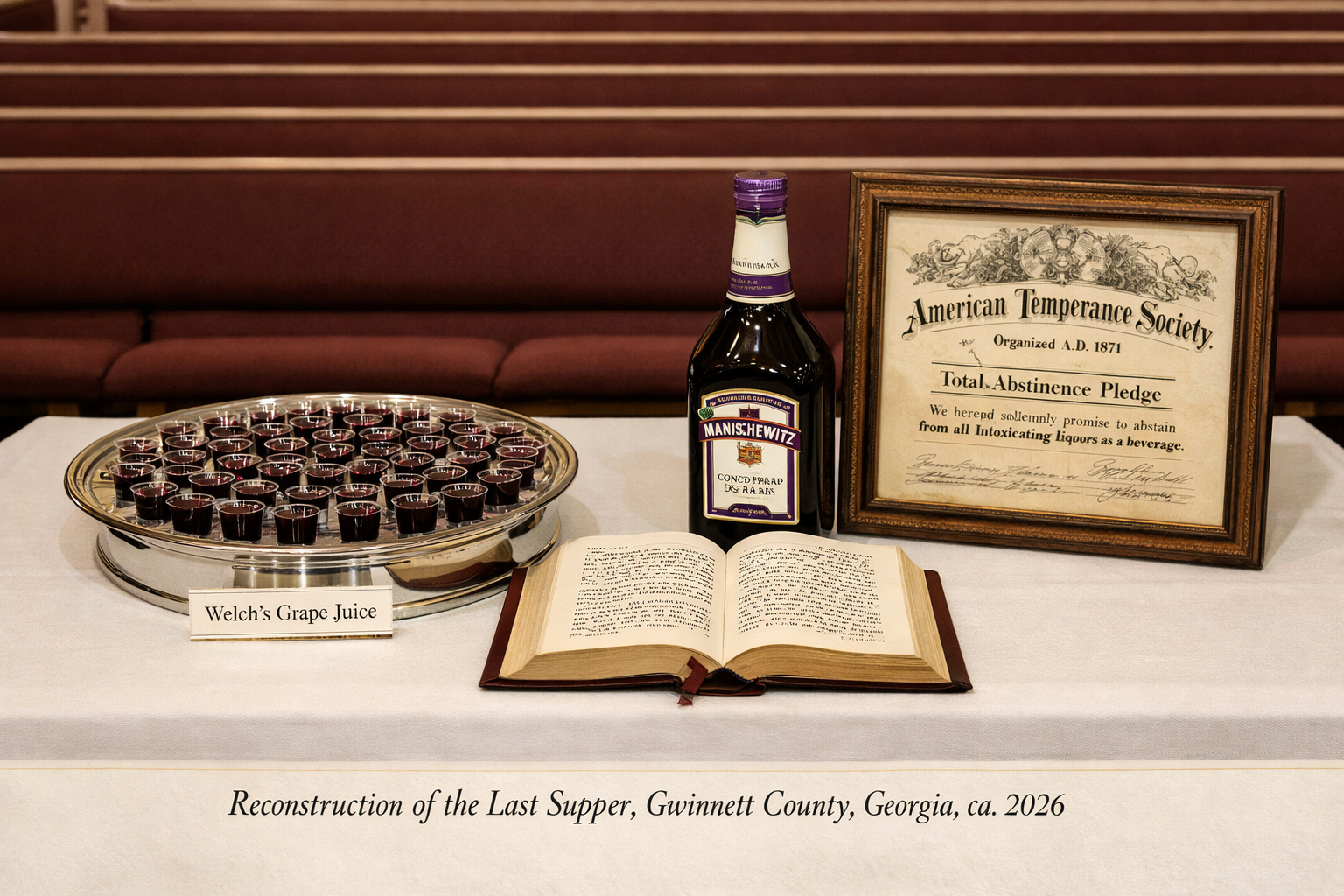
But this “logical” framework for some reason does not extend to other public spaces equally. You may think “oh, I bet they also avoid restaurants that serve alcohol, since alcohol is forbidden” — no. They go to those. Applebee’s is fine. The Regal Cinema is not. A building where people drink is acceptable public space. A building where people watch Cars 2 is a spiritual hazard.
So when former congregants “whine” (Jay’s words, not mine) about missing out on normal or common childhood experiences due to the strict and (dare I say) nonsensical rules of the church they were raised in, they do actually have a valid point. But it’s a point Jay Reed would like dismissed because, you know, nobody burned them on a stake.
And since Jay brought it up, why don’t we spend a little more time examining this movie theater rule. And let’s go ahead and ask that forbidden question, “why,” and see where it takes us.
Let’s start with the Greek. The KJV translates eidos, the Greek word in 1 Thessalonians, as “appearance.” It’s a reading that most biblical scholars, including conservative ones, find untenable. The word eidos means “form” or “kind,” not “appearance” in the sense of seeming. The verse is an instruction to avoid every form of evil, not everything that might look evil to a passerby. The KJV translation that gave us “appearance” is, in this instance, misleading, and the theological structure built on that mistranslation is — to be precise — a doctrine built on a translation error.
But here’s where the rabbit hole goes deeper. Because this “appearance of evil” argument is actually a very modern one, and seems to be transposed on a much older IFB prohibition, which has morphed significantly from its original intent. Where did this rule come from and why is it attached specifically to the location and not to the movie’s content?
There is a credible and well-documented theory — I want to be clear it is a theory, but it is the kind of theory that fits the evidence so neatly it demands to be examined — that the movie theater prohibition was critically transformed, if not generated in its current intensity, by the desegregation of American public life.
That’s right. The theory is that the ifb movie theater prohibition originated in its current form as racism.
In the pre-Civil Rights era, the fundamentalist Baptist movement prohibited movie going purely based on immorality of the people who make movies, not the theater itself. John R. Rice, founder of The Sword of the Lord — the most influential fundamentalist publication of the 20th century, circulating 90,000 copies by 1953 — wrote a book in 1938 called What Is Wrong with the Movies? Its chapter titles included “MOVIES ARE MADE BY SINFUL WICKED PEOPLE” and “GREED AND NOTORIETY—SINFUL MOTIVES.” The problem was Hollywood’s moral character. The theater was merely where Hollywood’s output was displayed. However, this was not yet a “standard” ifb doctrinal position.
Then came 1964. The Civil Rights Act mandated the desegregation of public spaces. Including theaters.
A frequency analysis of The Sword of the Lord archives shows a notable spike in anti-theater rhetoric beginning in the mid-1960s. Notably, this spike did not occur in 1968, when the Hays Production Code was abandoned and films genuinely became more sexually explicit and violent, which is when you’d expect the content-based argument to intensify. The rhetorical spike correlates more closely with the Civil Rights Act than with the end of the Production Code. And crucially, the type of argument shifts. Pre-1964, the objection is to what is on the screen. Post-1964, the objection increasingly attaches to the environment — the “dangerous atmosphere,” the “crowd,” the “unwholesome” character of the space itself.
The parallel with segregation academies — private Christian schools founded in the South explicitly to avoid desegregated public schools — is striking. Bob Jones Sr., whose university was among the most influential institutions in the IFB world, declared in a 1960 radio sermon that racial segregation was the will of God. When the IRS challenged the tax-exempt status of segregated institutions, the movement pivoted from defending segregation to defending “religious freedom.” The arguments deployed to justify withdrawal from integrated public schools — “dangerous environment,” “protecting our children,” “loss of control over who our children associate with” — are structurally identical to the arguments deployed, in the same period, against the newly integrated public theater.
The home video era of the 1980s delivered the decisive proof that this was never about content: when the VCR arrived, the same Hollywood films that were forbidden at the Regal became permissible at home. If the objection had always been to what was on the screen, the VCR should have been condemned with equal fervor. It was not. The “appearance of evil” argument was quietly developed to explain why the location remained sinful when the content was now available at home. It is, to use the technical term, a post-hoc rationalization, a theological argument invented to justify a sociological phenomenon whose true origin was becoming unspeakable.
This is what historians call doctrinal scar tissue. The original wound heals over, the cause is forgotten or suppressed, but the scar remains: rigid, unyielding, and inexplicable to anyone who examines it without knowing the history.
So when Pastor Jay lists “you didn’t get to go to the movies” as a trivial grievance, equivalent to not having a sports car, he is standing inside a tradition that built that rule on racial terror and is now asking his congregation’s children to accept it on the grounds of a mistranslated Greek word.
I do not think Pastor Jay knows this history. I think it is genuinely possible he has never looked into where the rule came from. And I think that is, in its way, the entire sermon in a single image: a rule from a complicated and shameful history, being enforced today on theological grounds that don’t quite hold up, on children who will be told that noticing this is a martyr complex.
Interlude: The Youth Pastor Is Not Out to Get Your Child (Probably)
The paranoia section deserves its own moment. There are people in this congregation, Jay tells us, who believe the youth pastor is specifically targeting their children. Who are keeping score on what other families get versus what they get. Whose life verse is, and I am not making this up, “just because you’re paranoid doesn’t mean you’re wrong.”
“Those teachers are out to get my children. That youth pastor is out to get my children. These other kids are out to get my child. No, they’re not.”—Pastor Jay Reed
It feels like he might be addressing someone specific here. I wonder if he can see them from up there.
The specific texture of this — the scorekeeping, the escalating persecution narrative, the parent who has taught their child that every authority is an adversary — is real and recognizable.
But this is not an invitation to self-examination in the therapeutic sense. He not suggesting that a parent ask themselves why you are like this, to trace their attitudes to their origins, or to understand what history they are dragging into the room. That is the approach he has been dismantling for the last forty minutes. He is not suddenly recommending it for adults.
What he is doing is something different. He is making a transmission argument. Your attitudes drip onto your children. If you deflect, your child deflects. If you don’t respect authority, your child won’t either.
“The reason we let it go on in our children’s life is because we don’t deal with it in our life.”—Pastor Jay Reed
This is the engine: character is caught, not just taught. Your child is watching you.
It’s a good argument. It’s also, I cannot help noticing, the argument that the “reasoned approach” people make. The whole premise of the responsive-parenting tradition Jay has been incinerating for the last hour is that children internalize what they observe — that modeling matters, that the relationship between parent and child shapes the child’s developing sense of self and other, that you cannot simply mandate behavior into existence without attending to the relational environment in which the child is developing.
Jay has arrived at that conclusion from the opposite direction, through entirely different reasoning, and is now using it to argue for the importance of parental compliance with authority — which is a little like a man who has been arguing passionately against umbrellas pausing to note that yes, actually, you probably shouldn’t stand in the rain.
This is also the reasoned-approach crowd’s central concern about his model. They worry that children raised in high-control, low-explanation environments model compliance without internalizing the values underneath it, and then when the external pressure lifts, the behavior goes with it.
He would say: that’s exactly why you cannot let up. Keep them under until submission is the only thing they know. He has a young man who now pastors churches to prove it works.
They would say: or you get an adult who has simply never been allowed to develop their own judgment, which eventually comes due.
They Cannot Win (This Is the Spiritual Part)
Here is where the sermon gets tactical: train into your children obedience, respect, responsibility, righteousness, and — fifth, last, almost as an afterthought — kindness. Do not accept lying, misleading, blame-shifting, comparisons, or professions of inadequacy. Make them look you in the eyes. Do not allow eye-rolls; the moment you accept bad body language you have lost.
There is also a brief detour here in which Pastor Jay tells parents that when their child says “I can’t,” the correct response is “Oh, you will.” He then instructs the congregation — and again, I am reading directly from the transcript — to stand in front of a mirror and practice being menacing. He acknowledges that someone in the room is smiling. He does not approve of the smiling.
“You guys need to stand in front of a mirror and work on being menacing.”—Pastor Jay Reed
And then, the line he tells the congregation is worth the price of admission:
“Do not seek to understand their rationale. Make them understand yours.” —Pastor Jay Reed
He means this as wisdom. Read it again slowly. The parent’s job is not to comprehend the child. The parent’s job is to install comprehension in the child. And specifically, comprehension of the parent’s point of view. The information flow is one direction. The child is a vessel. The parent pours.
This is by no means controversial within the IFB tradition. This is the tradition. But it has a name in the developmental psychology literature, and that name is authoritarian parenting. Authoritarian parenting is distinctly different from authoritative parenting, which combines high expectations with high responsiveness. The research on authoritarian parenting (high control, low responsiveness) is fairly consistent: it produces compliant children in controlled environments and children with higher rates of anxiety, lower self-esteem, and reduced capacity for autonomous decision-making in uncontrolled ones. This is not a progressive talking point. It is in the Journal of Child Development. You can look it up, assuming you are allowed to look things up
Pastor Jay would likely respond — and does, implicitly, throughout this sermon — that secular developmental psychology is itself a product of the failed reasoned approach. The research was produced by the same culture that produced the protest kids and the participation trophies. He is not wrong that the culture producing the research is the culture he is critiquing. He is, however, asking us to discard a body of empirical evidence about children — actual children, observed over time — in favor of a hermeneutical position about a Bronze Age agricultural metaphor.
But we have arrived at the climax. Gather round.
“They cannot win. Do not let them win. Your job is to keep them under until they figure out what authority is.”—Pastor Jay Reed
He prefaces this by saying it “feels like it’s not spiritual, but it’s supremely spiritual.” I want to flag that “they cannot win” is also the strategic doctrine of every authoritarian government in recorded history, and none of them have led with “this feels a little off but bear with me.”
The child is now explicitly the opponent. The parent’s role is not to guide but to defeat. The relationship has been reframed as a contest with one permissible outcome, and the pastor is telling every parent in the room that their job is to make sure they win it.
He also recommends grounding, which he is not sure people still do. The method is straightforward: inventory everything that brings the child joy, remove it, and then when the child still does not comply, look around for anything you missed. “You really like that? Good. Because we’re taking it away, too.” This is presented as escalation strategy. It has the structure of a recipe. Take child. Remove joy. Repeat until tender.
“There’s no joy in Mudville till this is fixed. There’s no happiness. I’m not going to pretend like everything’s okay.” —Pastor Jay Reed
And then the success story.
There is a young man, Pastor Jay tells us, who is now a pastor himself — proof of concept. Good guy. But he was going to be trouble. He got thrown out of school. He alienated everyone who loved him. And then, finally, after his parents wouldn’t let up, Pastor Jay wouldn’t let up, the church authorities wouldn’t let up — “He called me on the phone. I remember the day. And he said, ‘I’m tired. What do I need to do to get back?’”
Pastor Jay tells this story as victory. And in the terms of the sermon, it is — the system worked, the young man submitted, he is now a pastor, he has presumably preached in this room.
But let’s read it from inside the young man’s experience, which the sermon invites us not to do.
A young person — age unspecified, but young enough to still be under parental authority — has been removed from his school, has strained every relationship he has, and has found that every door he turns to is held shut by the same network of adults. His parents. His pastor. The church. Every authority figure in his entire social world is coordinated in refusing him any exit that doesn’t involve surrender. He has nowhere to go. He has no one to call who is not part of the system that is conditioning him. He calls Pastor Jay exhausted and asks what he needs to do to get back in.
That is the goal. That is what “they cannot win” means in practice. You build a total environment — family, church, school, social network — with no permeable edges, and you apply unrelenting pressure until the young person has no remaining options except compliance. And when they finally call and say I’m tired, you call it discipleship.
There is a word for the process of isolating someone from all support systems, removing all exit options, and applying sustained pressure until they surrender their own judgment to yours. This sermon wants us to believe that word is “love” but the correct word is coercion.
“Mothers, you need to learn this phrase: ‘Over my dead body.’ You’re not going to win.” —Pastor Jay Reed
I want to sit with the Proverbs passage he lands on to close: “Chasten thy son while there is hope.” He circles “while there is hope” like a man marking a ticking clock. The window is closing. The older they get, the more it closes. Some windows don’t open again.
He is not wrong that the window closes. That is also what the young man on the phone discovered — that something had closed that he couldn’t reopen except by calling and saying I’m tired. Pastor Jay describes this as the child coming to his senses, like the Prodigal Son. I would note that the Prodigal Son left. He went to a far country. He squandered his inheritance among harlots, which sounds like a good time until it isn’t, and then he came home. That is what made his return voluntary; he had somewhere else to go and chose to come back anyway.
In the system Pastor Jay is describing, there is no far country. The far country is the entire world outside the network, and the network makes sure the child has no resources to survive in it. The return isn’t chosen. It’s the only remaining option. By design.
“Nero fiddled while Rome burned. Don’t fiddle while your family burns.” —Pastor Jay Reed
Nero, for what it’s worth, also believed he was the highest authority in his environment and that everyone under him should submit without question or face consequences. I am not drawing a direct comparison. I am simply noting that Pastor Jay reached for that particular historical figure and not, say, a good shepherd.
He closes the altar call by turning to the kids in the room directly.
“Kids, listen. Your parents may be unwilling to confront what’s going on in your heart, but if you don’t fix you, you got to live with you broken.” —Pastor Jay Reed
This is, in isolation, not terrible advice. Personal accountability is real. But it is landing after seventy-five minutes of instruction to parents on how to ensure their children have no viable alternative to the church’s definition of “fixed.” The kids in this room are being told they are broken and then told that the system surrounding them is the only repair shop in town.
The repair shop, conveniently, is also the entity that has just spent an hour defining what broken looks like.
Brother Kent Gets Baptized and the Baby Has Responded Well to Correction
After the altar call, a man named Kent Graham gets baptized. He came from a tradition that sprinkled. He wanted to join Peachtree Road. He got dunked. Because according to Jay Reed, “that’s not in the bible.”
Someone has left Easter eggs by the door. Missions conference is coming. The international dinner on the twenty-seventh will feature recipes from ChatGPT, with the explicit instruction to avoid ghost peppers and scotch bonnets. There is a baby somewhere on the premises who, after a single pastoral conversation, has improved dramatically as a person. I don’t know what correction looks like for a newborn, but Pastor Jay seems satisfied with the results, and I have decided not to follow this particular implication wherever it leads.
These people are going to show up for each other this week. They are going to bring food to the sick and pray for the ones with cancer and remember each other’s names and mean it. The warmth in this room is real. The community is real.
The theology of the evening is that this same community — this warmth, this belonging, this network of people who know you by name — is also the architecture of the system Pastor Jay described tonight. The place where there is no gap between the authorities. Where the child can find no daylight. Let’s hope this also means Brother Ben has been informed that his reasonable safety concern regarding the railing is being taken under advisement. (Stay strong, brother Ben.)
The most controlled environments are often the most loving ones. That is not a paradox that resolves cleanly. It is just the truth of the thing, sitting there at the end of a Sunday evening in Atlanta, while Brother Kent drips on the carpet and someone offers to assemble Easter eggs, and the baby sleeps after being spoken to firmly once, and the window that Pastor Jay mentioned keeps, quietly, closing.
Note: This analysis represents the author’s subjective interpretation of the sermon delivered on the date mentioned above. For further details, please see my full [Legal Disclaimer]




Leave a Reply