
This project began as a question I couldn’t quite shake.
I’ve spent most of my adult life around the Bible. I’ve studied it and taught it. I’ve watched people use it as both balm and bludgeon. I’ve sat in congregations that disagreed fiercely with one another and still managed to take Scripture seriously. I’ve heard conservative theology preached with rigor and liberal theology preached with care. None of this was new to me. None of it felt exotic.
Which is why the knock on my door one Saturday morning stood out.
Two teenage girls stood on the porch, neatly dressed. They offered warm, confident smiles and inquired into the state of my mortal soul. “If you died today, do you know for sure you’d go to heaven?”
I answered honestly: that I had spent a good portion of my life thinking about that question, that I’d studied theology, that I’d be happy to talk about it if they were interested.
As it turns out they weren’t.
Their reply was too quick, as if it had been waiting its turn: a short explanation of salvation, a rehearsed verse, an invitation to church. When I asked where they went, one of them brightened, “Peachtree Road Baptist Church.” Another thrust a pamphlet at me like a relay race baton. When I asked what they liked about it, there was a pause, then some mumbling about “good preaching” and “the truth.”
I tried again. Who was the pastor? What kind of church was it? What did they do when people asked questions they didn’t agree with?
They smiled. They nodded. They repeated themselves.
What struck me wasn’t their certainty—it was their distance. I was standing a few feet away, speaking plainly, and yet nothing I said seemed to register as something that required a response. They were polite to a fault. They weren’t hostile. They simply weren’t there in the conversation. I realized, a few minutes in, that whatever was happening on my porch wasn’t really for me at all. I was a prop. And whatever this exercise was about, had nothing to do with inviting me to their church.
I thanked them. They thanked me. I closed the door.
I kept thinking about the moment when I said I’d studied the Bible—and how smoothly that information slid off them, as though it had no category. Not threatening. Not interesting. Just irrelevant. I was a data point they’d been trained to ignore. That was the part that stayed with me.
Curiosity crept in quietly after that. What kind of church produces congregants willing to sacrifice their Saturday mornings knocking on strangers’ doors with the aim of “winning souls,” yet so blatantly uninterested in biblical discourse? What kind of preaching trains people to deliver truth without needing to listen?
It occurred to me that persuasion might not be the goal at all. This didn’t feel like an effort to convince outsiders or transmit belief so much as a way of maintaining it internally—preserving the appearance of confidence and care while insulating certainty from engagement. What I was seeing seemed less concerned with scrutiny than with continuity: a system structured to keep ideas intact by limiting the conditions under which they might be examined.
I had to see the rest of it. So the next Sunday morning, I visited Peachtree Road Baptist Church. It is an unremarkable, but prosperous-looking white steepled structure located about 15 miles north of the Atlanta beltway.
The church sits in the heart of Gwinnett County, by no means a cultural battleground. It is one of Georgia’s most demographically diverse counties—and has been for some time. Liberal and pluralistic values are not “encroaching” here; they are the ambient reality. Peachtree Road Baptist Church is not under siege. It sits quietly in a county that has largely moved on without noticing.
It turns out, Peachtree Road Baptist church considers itself an Independent Baptist Church. The term can be misleading, as it implies this church may be unique. Though it lacks centralized denominational leadership, it is actually part of a fairly large network of likeminded churches throughout the country. At first brush, the church is exactly what one expects an American suburban church to be: clean, efficient, friendly at a distance. The hymns were familiar early to mid-20th century tunes. The flock of approximately seventy-five, with a healthy mix of youth, middle-aged, and wizened; were welcoming without being intrusive. Nothing about the surface experience suggested fanaticism or volatility. If anything, it felt carefully designed to reassure.
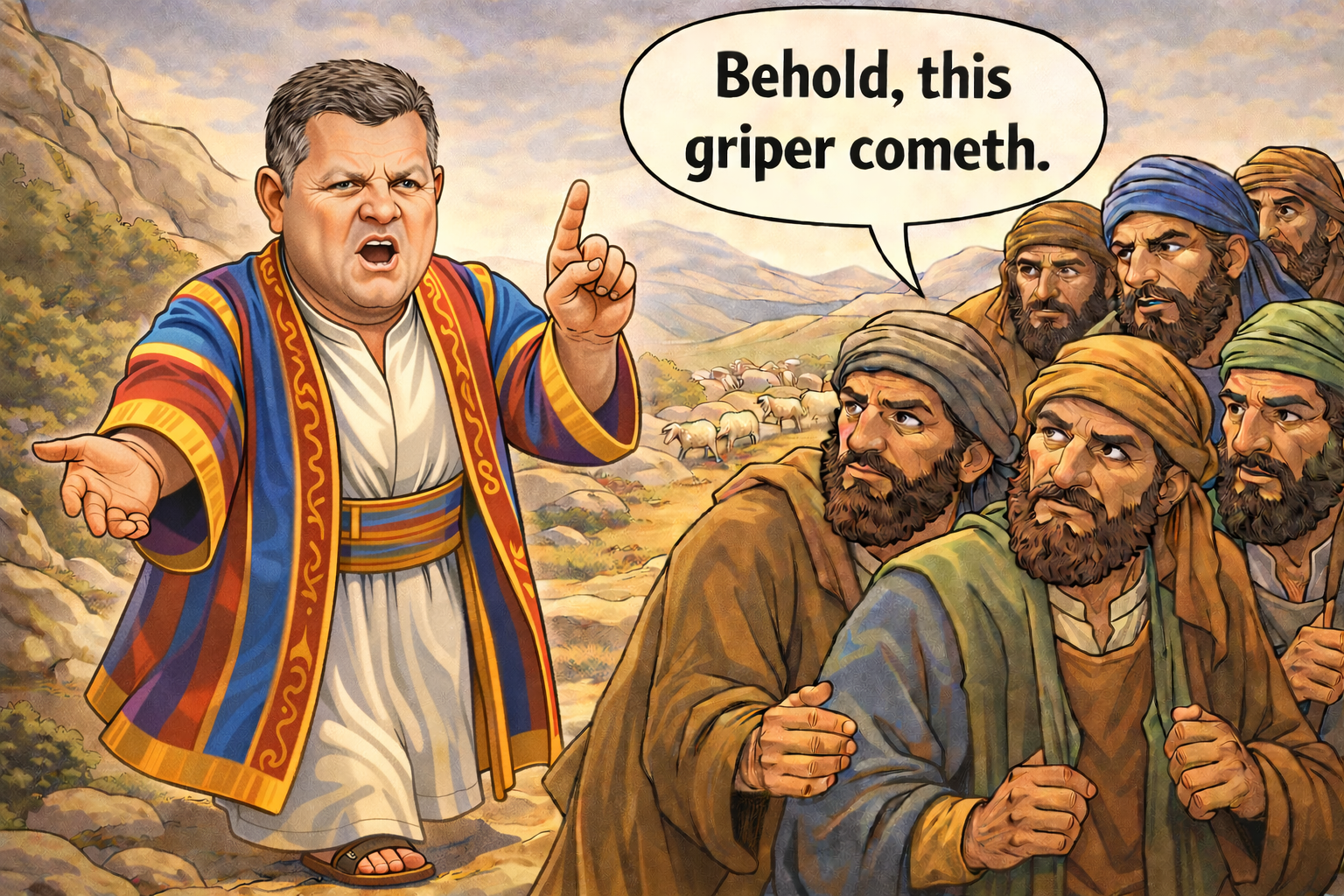
The pastor, Jason “Jay” Reed, stepped to the pulpit. White. Middle-aged. Average height. Average build. A square, beardless face framed by a conservative haircut. He wore a dark suit—not a stylistic choice, as it turns out, but a requirement. Independent Baptist preachers wear suits. Always. Just as the women in the congregation wear skirts. However, at Peachtree Road Baptist Church, these uniforms are inconspicuous. There are no visual extremes—no prairie silhouettes, no doily collars, no sculpted bangs or hairstyles you’d see in an 80’s cult documentary. Nothing that immediately signals you’ve stepped into a time capsule.
An uninitiated or casual attendee could sit through several services—perhaps even years of services—without realizing that many members here believe a woman wearing pants is a moral offense, justified through selective appeals to Old Testament law, or that a male seated in the pews in casual or even business casual attire might be read as outright contempt of the Lord. The aesthetic is modern. The expectations are not.
And then the sermon began.
I was immediately struck by the hardness of Jay Reed—not theatrical, not exaggerated, but unhidden. A bluntness in the set of his jaw, a lack of softness around the eyes. Not anger, but certainty. While the existence of this hardness itself did not surprise me, I was surprised that it existed so candidly in a space working very hard to feel unthreatening. The coffee bar, the music, the smiles, the language of welcome—all of it bent toward reassurance. The man at the center did not.
By comparison, the actual content of the message was something of a letdown. This was neither the raw fundamentalism nor the open belligerence of extremist preaching Jay Reed promised in his opening salvo. Instead, I encountered something subtler: a sermon that wanted to feel dangerous while remaining perfectly safe. Claims framed as brave simply because they were unfashionable. Strong language wrapped in jokes. Authority asserted, then immediately insulated against challenge.
The Bible was everywhere—but always moving quickly, never lingering long enough to invite examination. Cultural decline loomed constantly, but vaguely. Enemies were named in outline, almost never in detail. The message was confident, assured, self-congratulatory—and yet curiously thin.
I left unsettled, not because I’d heard something shocking, but because I hadn’t.
Over the months that followed, I continued listening to Jay Reed’s sermons at Peachtree Road Baptist Church. I noticed patterns: the illustrations, the coded-language, the rhetorical maneuvers became as familiar as beats in a song. I also did a bit of research, parsing the “Independent Fundamentalist Baptist” movement, its history, its splintering, its scandals, its long habit of reinventing itself just enough to survive.
What slowly became clear was that this wasn’t a local peculiarity. It’s a genre. It’s a church that borrows the posture of old-school fundamentalism while sanding down its edges for a modern audience. The hardness remains, but it’s been taught to smile, and to not look so weird.
This fascinated me. Through Jay Reed’s sermons, I was told, again and again. This is bold. This is courage. As if saying the same things men have said in utter safety from pulpits for hundreds of years required exceptional bravery.
Most of all, it made me wonder; is that all it takes for extreme ideas to become ordinary? If they’re delivered in a carefully modern package, framed as common sense, and repeated often enough to feel inevitable?
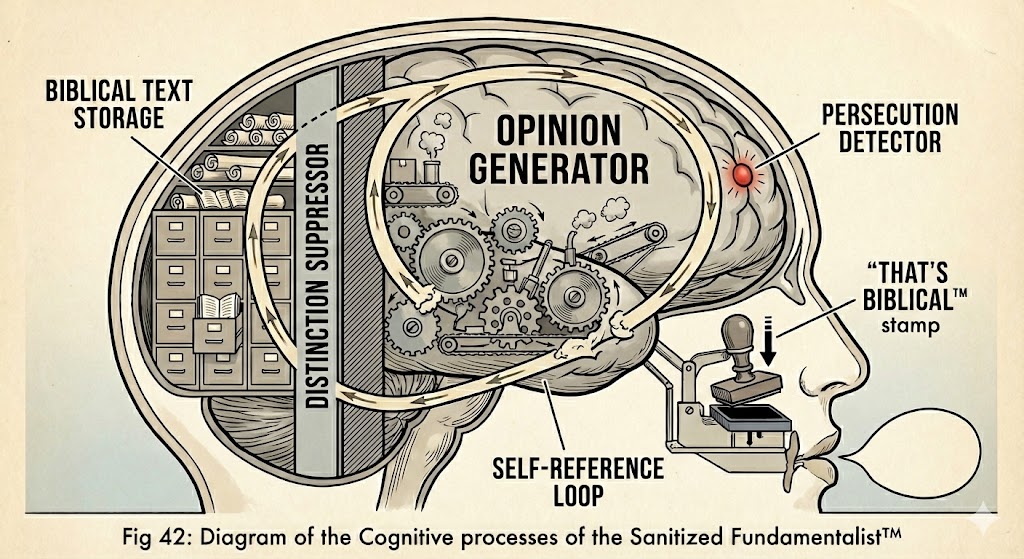
This blog is not an exposé, and it is not intended as a theological refutation. The doctrines Jay Reed presents are nothing new, and frankly, unremarkable in the landscape of conservative evangelicalism. What interests me is the delivery: the rhetorical machinery that allows extreme and unchallenged certainty to feel ordinary, safe, and even virtuous in a modern suburban context.
What follows is not outrage. It is close listening. And occasionally, the quiet discomfort that comes from watching “conviction” perform for an audience that mistakes repetition for truth.
Welcome.
Note: This analysis represents the author’s subjective interpretation of the sermon delivered on the date mentioned above. For further details, please see my full [Legal Disclaimer]





Leave a Reply